
Surfshark Review
A 2026 look at Surfshark's real pricing, its Deloitte and Cure53 audits, unlimited-device policy, and where NordVPN, ExpressVPN, Proton VPN or Mullvad fit a security-minded buyer better.

Surfshark is worth it in 2026 for anyone who wants audited no-logs privacy on unlimited devices without per-seat pricing. The Starter plan runs $2.49/month on the two-year plan, which bills 27 months up front, rising to $16.45/month if you pay monthly, and the tiers are not equal: Starter covers the VPN and Alternative ID, One adds antivirus and breach alerts, and only One+ includes Incogni data removal and US identity theft coverage (per Surfshark's pricing page, read 19 October 2026).
Its strongest case is the audit trail: Deloitte has checked Surfshark's no-logs claim twice (2023 and 2025) and Cure53 has reviewed its infrastructure three times, most recently the Dausos protocol in 2026. The catch is the renewal: once the discounted term ends, Starter renews at $79 a year, One at $99 and One+ at $119, before tax, per Surfshark's renewal price terms (read 19 October 2026). Security teams who need a stricter jurisdiction on principle should look at Mullvad or Proton VPN instead.
Key factsBest for: Households and small teams that want unlimited devices on…
- The unlimited-device value pick with two rounds of Deloitte no-logs audits behind it.
- Founded: 2018
- Headquarters: Amsterdam, Netherlands
- Simultaneous devices: Unlimited
- Alternatives covered: NordVPN, ExpressVPN, Proton VPN, Mullvad
Pros
- Unlimited simultaneous devices on every plan, well beyond the 5 to 14 device caps rivals set.
- Two Deloitte no-logs assurance reports (2023, 2025) and three Cure53 infrastructure audits back the privacy claim.
- Clear upgrade path: Starter covers the VPN and masked identities, One adds antivirus and breach alerts, and One+ adds Incogni data removal and US identity theft coverage.
Cons
- The pricing page leaves out the renewal rate; Surfshark's renewal terms list $79 a year for Starter, $99 for One and $119 for One+, before tax (read 19 October 2026).
- Netherlands is a stronger jurisdiction than the US but weaker than Switzerland's Proton VPN or Sweden's anonymous-account Mullvad.
- The 7-day free trial needs a credit card or PayPal, and it rolls into the full upfront charge unless you cancel in time.
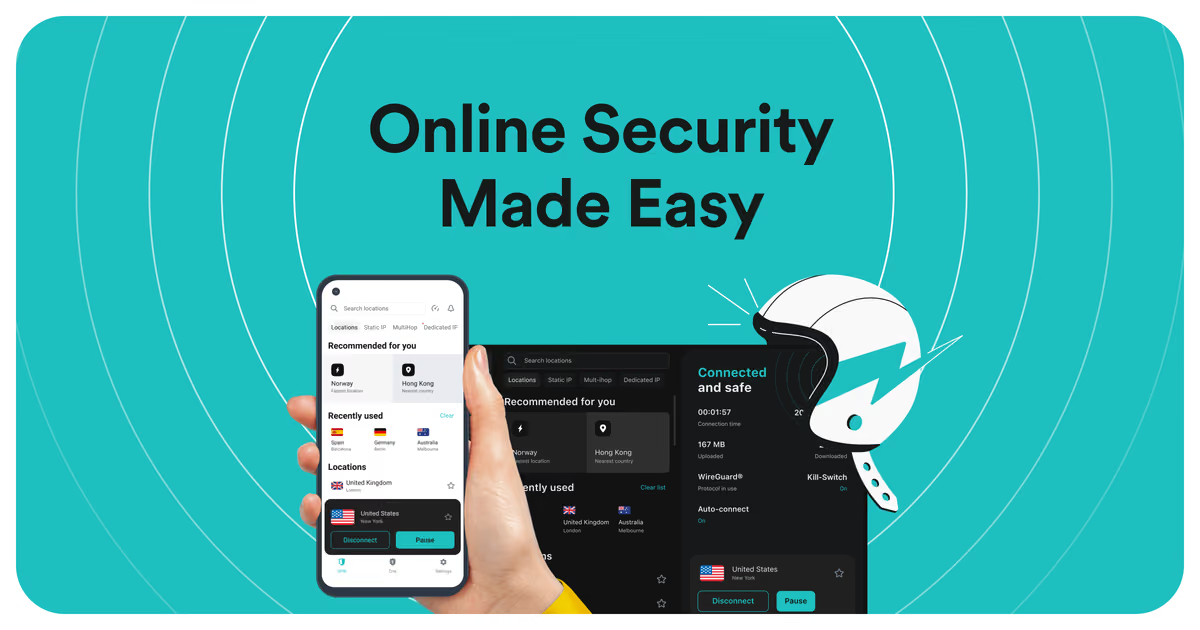
Surfshark launched in 2018 as a Lithuanian-founded VPN that undercut the established players on price while matching them on features, and it has spent the years since building the audit record to back that up. It now operates as Surfshark B.V. out of Amsterdam, in a jurisdiction with no mandatory data retention law for VPN providers.
The pitch that made it stand out from day one still holds: one subscription covers unlimited devices, with no per-seat math to do.
This review checks what a buyer actually gets for the money in 2026: the verified pricing across all three tiers, the audits behind the no-logs and infrastructure claims, day-to-day performance on WireGuard and Surfshark's own Nexus network, and where the plans fall short.
We line it up against NordVPN, ExpressVPN, Proton VPN and Mullvad so you can see when Surfshark's price and device policy win and when a stricter jurisdiction or a flat, no-tiers model serves you better. Privacy-conscious households and small teams juggling a lot of devices are the core audience.
What is Surfshark?
Surfshark is a consumer VPN and digital security suite from Surfshark B.V., headquartered in Amsterdam, the Netherlands.
Its core product is a VPN client for Windows, macOS, Linux, iOS, Android and major browsers, running on 4,500+ RAM-only servers across 100 countries and built on WireGuard alongside Surfshark's own Nexus network technology, which rotates traffic across multiple servers instead of a single exit node.
Every subscription covers unlimited simultaneous devices, a policy most competitors still cap at 5 to 10.
Beyond the tunnel, every plan includes Alternative ID (masked email and generated personal details for signups).
The One plan adds Antivirus (real-time scanning, webcam protection) and Alert (breach monitoring for emails, credit cards and personal IDs), and only One+ adds data removal through Incogni, which requests brokers delete your records, plus identity theft coverage up to $1M for US residents, with New York State excluded (Surfshark's pricing page, read 19 October 2026).
Surfshark sits in the value tier of the market: it competes on price and device count, not on a stricter privacy jurisdiction the way Mullvad or Proton VPN do.
How Surfshark works
Setup is an email and password, no identity verification, and the apps install in a few minutes on any platform. The interface leads with a single connect button and a server map; WireGuard is the default protocol and it is the fastest option in day-to-day use, with OpenVPN available as a fallback.
Because there is no device cap, a household can run the VPN on every phone, laptop, streaming box and router at once without tracking a seat count.
CleanWeb blocks ads, trackers and known malware domains at the app level, MultiHop routes traffic through two countries for an extra hop, and a kill switch drops your connection rather than leak traffic if the tunnel fails.
On the One and One+ plans, the Antivirus, Alert and (One+ only) Incogni tools live in a separate dashboard tab rather than the VPN screen, so they read as bundled add-ons rather than a single unified product.
Rough edge: the pricing page itself leaves out the renewal rate, which sits in Surfshark's separate renewal price terms ($79 a year for Starter, $99 for One, $119 for One+, before tax, read 19 October 2026).
Surfshark key features
Surfshark pricing
Surfshark, NordVPN, ExpressVPN, Proton VPN and Mullvad all publish list prices, verified on each vendor's own pages in September 2026. Proton VPN and Mullvad both offer a way to use the service without a paid tier: Proton has a genuine free plan, and Mullvad's flat rate has no long-term contract to escape from.
Surfshark's cheapest entry, the Starter plan on the two-year term, matches NordVPN's lowest 2-year rate and undercuts ExpressVPN's $2.99/month Basic tier. Mullvad breaks that pattern entirely: one flat $5.70/month regardless of how long you commit, with no discount ladder to climb and no promo rate to lose later.
The tradeoff on Surfshark's side is the renewal: its renewal price terms list $79 a year for Starter once the first term ends (read 19 October 2026), so the price you pay today is not the price you will pay later.
Cyberpresso data: Surfshark is one of 33 VPN tools Toolradar tracks in its VPN category as of September 2026, a field crowded enough that an unlimited-device policy and a public audit trail are what separate a pick from the rest of the pack rather than price alone.
See also Surfshark on Toolradar and NordVPN on Toolradar for the tool-level breakdown.
Methodology: we checked list prices for Surfshark and four direct competitors on each vendor's own pricing page in September 2026, cross-referenced each provider's published no-logs and infrastructure audits, and weighed device limits and jurisdiction against price.
| Plan | Price | Best for |
|---|---|---|
| Surfshark Starter (24 + 3 months) | $2.49/mo, 27 months billed up front, renews at $79/yr | VPN and Alternative ID; Antivirus, Alert and Incogni not included |
| Surfshark Starter (12 + 3 months) | $3.39/mo, 15 months billed up front | Same feature bundle as the two-year plan |
| Surfshark Starter (monthly) | $16.45/mo | Same feature bundle, month to month, no long-term commitment |
| Surfshark One (24 + 3 months) | $2.49/mo, 27 months billed up front, renews at $99/yr | Adds Antivirus, Alert and scam protection to Starter; no Incogni (read 19 October 2026) |
| Surfshark One+ (24 + 3 months) | $3.99/mo, 27 months billed up front, renews at $119/yr | Highest-priced tier, the only one with Incogni data removal and US identity theft coverage |
| NordVPN Basic (1-year) | $5.49/mo ($65.88 billed yearly) | VPN with 10 simultaneous device connections |
| NordVPN Ultimate Max (1-year) | $10.49/mo ($125.88 billed yearly) | Top NordVPN tier in the current lineup, priced above Basic and Complete |
| ExpressVPN Basic (2-year) | $2.99/mo, renews at $99.95/yr | 10 simultaneous devices, TrustedServer RAM-only network |
| ExpressVPN Pro (2-year) | $7.49/mo, renews at $199.95/yr | Top ExpressVPN tier, 14 simultaneous devices |
| Proton VPN Free | Free | One device, no data cap, no time limit |
| Proton VPN Plus (2-year) | $3.49/mo ($83.76 billed) | 10 simultaneous devices, Switzerland jurisdiction |
| Mullvad (any term) | $5.70/mo flat | 5 simultaneous devices, anonymous account number, no discount tiers |
Surfshark pros and cons
What we like
- Unlimited simultaneous devices on every plan, well beyond the 5 to 14 device caps rivals set.
- Two Deloitte no-logs assurance reports (2023, 2025) and three Cure53 infrastructure audits back the privacy claim.
- Clear upgrade path: Starter covers the VPN and masked identities, One adds antivirus and breach alerts, and One+ adds Incogni data removal and US identity theft coverage.
What could be better
- The pricing page leaves out the renewal rate; Surfshark's renewal terms list $79 a year for Starter, $99 for One and $119 for One+, before tax (read 19 October 2026).
- Netherlands is a stronger jurisdiction than the US but weaker than Switzerland's Proton VPN or Sweden's anonymous-account Mullvad.
- The 7-day free trial needs a credit card or PayPal, and it rolls into the full upfront charge unless you cancel in time.
Who Surfshark is for
Surfshark fits households and small teams that want every device covered under one subscription without doing per-seat math, plus, on the One plan and above, a bundled antivirus and breach-monitoring layer instead of buying those separately.
It suits buyers who prioritize an audited no-logs record and a reasonable price over squeezing out the last bit of jurisdictional distance from US and EU intelligence-sharing agreements.
If unlimited devices and a bundled security suite matter more than shaving your provider's home country further from Five Eyes territory, Surfshark earns its price.
Who should skip it: buyers who want the strictest possible jurisdiction should look at Mullvad, based in Sweden with anonymous account numbers and no email required, or Proton VPN, based in Switzerland with a genuinely capable free tier.
Anyone who wants to know their renewal price before they buy should read Surfshark's renewal price terms, since the pricing page leaves that figure out. Buyers who need more than 10 devices covered on a cheaper competitor will not find that combination anywhere but Surfshark.
Best Surfshark alternatives
If Surfshark is not the right fit, these are the closest options.
| Tool | Best for | Starts at | |
|---|---|---|---|
| Surfshark | Households and small teams that want unlimited devices on one subscription plus a bundled security suite. | From $2.49/mo (Starter, 27 months billed up front) | Visit → |
| NordVPN | Buyers who want the deepest audit history in the category at a similar 2-year price to Surfshark. | From $3.49 to $8.49/mo on the 27-month term depending on tier (Basic t | Visit → |
| ExpressVPN | Buyers who want the deepest published audit trail and TrustedServer's RAM-only architecture backed by KPMG. | From $2.99/mo (Basic, 2-year term), renewing at $99.95/yr | Visit → |
| Proton VPN | Privacy-first buyers who want a genuinely usable free plan or Switzerland's stronger privacy jurisdiction. | Free tier available | Visit → |
| Mullvad | Buyers who want a fixed price with no discount ladder and the option to sign up without an email address. | Flat $5.70/mo regardless of term | Visit → |


The bottom line
Surfshark earns its place for buyers who want an audited no-logs VPN covering unlimited devices without paying per seat. The Deloitte no-logs reports, the Cure53 infrastructure audits through the 2026 Dausos review, and its low entry price on the 2-year term make it hard to beat on value for a household running more than five devices.
The gap is the renewal: Starter renews at $79 a year before tax once the discounted term ends, a figure Surfshark prints in its renewal terms rather than on its pricing page.
Choose NordVPN if you want the deepest audit history and don't mind a 10-device cap. Choose ExpressVPN if TrustedServer's KPMG-verified architecture matters more than saving a dollar a month.
Choose Proton VPN if you want a real free plan or Switzerland's privacy jurisdiction, and choose Mullvad if a single flat price with no renewal math and an anonymous account number matter more than a bundled antivirus suite.
Buy Surfshark when unlimited devices and a bundled security suite are the deciding factor, not when jurisdiction alone is. Cite this: Cyberpresso, "Surfshark Review 2026," September 2026.
Frequently asked questions
How much does Surfshark cost?
Is Surfshark worth it in 2026?
Has Surfshark's no-logs policy been independently audited?
How many devices can I use with Surfshark?
What are the best Surfshark alternatives?
Some offers on this page may be paid placements or contain affiliate links.
Get the Cyberpresso brief
Free daily newsletter, read in 5 minutes.
Subscribe free