
Proton Pass Review
A privacy-first, end-to-end encrypted password manager from the Swiss team behind Proton Mail. A genuinely generous free tier, one of the cheapest paid plans, and its best value inside the Proton bundle.
Proton Pass is an open-source, end-to-end encrypted password manager from Proton, the Swiss company behind Proton Mail and Proton VPN. The free plan is unusually generous: unlimited logins, notes, cards, devices, passkeys, and 10 hide-my-email aliases. Pass Plus costs about 1.99 dollars per month billed annually (roughly 23.88 dollars per year), adding unlimited aliases, a built-in 2FA authenticator, Dark Web Monitoring, and secure sharing. Its real edge is privacy: Swiss jurisdiction, GPLv3 open-source code, independent audits by Cure53 and Recurity Labs, and integrated SimpleLogin aliases. The catch is maturity: it launched in 2023, so business and admin features trail 1Password and Bitwarden. Best value if you already want Proton Unlimited at 9.99 dollars per month.
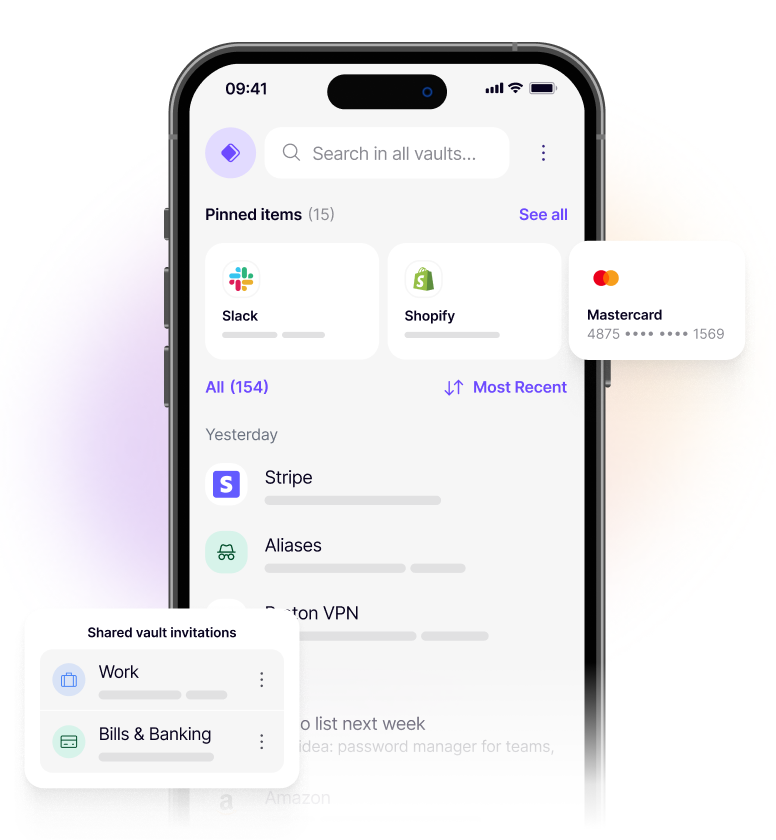
Proton Pass is the youngest product in a lineup that made its name on privacy. Proton, the Swiss company behind Proton Mail, Proton VPN, and Proton Drive, launched Pass in 2023 as a password manager built on the same end-to-end encryption that protects the rest of its ecosystem. For a security-conscious reader, that lineage matters more than a feature checklist.
This review is written for people who treat their password manager as part of their threat model, not just a convenience.
We look at what Proton Pass actually encrypts, how its open-source code and independent audits hold up, what the free and paid plans really cost, where it is genuinely strong, and where a three-year-old product still trails incumbents like 1Password and Bitwarden.
We also cover who should pick something else, and five alternatives worth comparing before you commit.
What is Proton Pass?
Proton Pass is a cloud, end-to-end encrypted password manager made by Proton AG, founded in 2014 by scientists who met at CERN and headquartered near Geneva, Switzerland. It stores logins, passkeys, credit cards, encrypted notes, and identities in encrypted vaults that sync across every device.
The defining detail is what gets encrypted. Proton Pass does not just encrypt the password field. It applies end-to-end, zero-knowledge encryption to usernames, web addresses, notes, and other fields, so Proton itself cannot see which services you use or what you store.
That is a stronger default than several mainstream managers, which leave metadata like saved URLs readable on the server.
Two things set it apart from rivals. First, integrated email aliases through SimpleLogin, the alias service Proton acquired in 2022, so you can create disposable hide-my-email addresses without leaving the app.
Second, the Proton ecosystem: the same account unlocks Proton Mail, Calendar, VPN, and Drive, and the paid Pass plan folds neatly into the Proton Unlimited bundle.
How Proton Pass works
Setup is familiar. You create or sign in with a Proton account, install the apps for Windows, macOS, Linux, iOS, and Android, and add the browser extension for Chrome, Firefox, Safari, Edge, or Brave. Importing from another manager or a browser is a guided step, and autofill works across websites and native apps once you grant permissions.
Day to day, most of the work is invisible. The extension offers to save and autofill logins, the password generator creates strong credentials, and the built-in 2FA authenticator stores and fills TOTP codes so you can retire a separate authenticator app.
Passkeys are supported across devices for phishing-resistant sign-ins, and a SimpleLogin alias is one click away whenever a site asks for an email.
Security features run in the background. Dark Web Monitoring alerts you when your credentials appear in a breach, and Proton Sentinel, an advanced account-protection program, adds combined human and AI monitoring for high-risk accounts.
Emergency Access lets a trusted contact reach your vault if something happens to you. The rough edges are maturity ones: admin tooling, reporting, and team management are thinner than the older competitors.
Proton Pass key features
Proton Pass pricing
Proton Pass publishes real, simple prices, which is refreshing in a category full of quote-based tiers. There are three ways to buy it.
Proton Free costs nothing and needs no credit card. It includes unlimited logins, notes, and credit cards, unlimited devices, the browser, mobile, and desktop apps, a password generator, passkeys on every device, alerts for weak and reused passwords, and 10 hide-my-email aliases.
It is one of the strongest free tiers in the market, and for many individuals it is genuinely all they need.
Pass Plus runs about 1.99 dollars per month billed annually, or roughly 23.88 dollars per year, and slightly more (around 4.99 dollars) if you pay month to month.
It unlocks unlimited hide-my-email aliases, the built-in 2FA authenticator, secure vault and link sharing, Dark Web Monitoring, file attachments, custom alias domains, Emergency Access, and advanced account protection with Proton Sentinel.
Proton Unlimited is 9.99 dollars per month billed annually (about 119.88 dollars per year) or 12.99 dollars month to month. It includes everything in Pass Plus plus Proton Mail, Calendar, VPN, and Drive.
If you want two or more Proton products, this is clearly the best value, and the effective cost of Pass inside it drops close to zero.
There is no separate business-only Pass tier as mature as the incumbents, so teams should weigh the Proton for Business plans against 1Password or Bitwarden.
| Plan | Price | Best for |
|---|---|---|
| Proton Free | $0 | Unlimited logins, 10 aliases, passkeys |
| Pass Plus | ~$1.99 / mo (billed annually) | Unlimited aliases, 2FA, Dark Web Monitoring |
| Proton Unlimited | ~$9.99 / mo (billed annually) | All Proton apps: Mail, VPN, Drive, Pass |
Proton Pass pros and cons
What we like
- End-to-end encryption on all fields, open-source code (GPLv3), and independent audits by Cure53 and Recurity Labs.
- Unusually generous free plan and one of the cheapest paid tiers among major managers.
- Integrated SimpleLogin aliases, built-in 2FA, passkeys, and Swiss privacy jurisdiction.
What could be better
- Younger than 1Password and Bitwarden, so some polish and edge cases are still maturing.
- Business, admin, and team-management features trail the incumbents.
- Best value really lands only inside the Proton Unlimited bundle.
Who Proton Pass is for
Proton Pass is a strong fit for privacy-conscious individuals who want end-to-end encryption they can verify, Swiss data jurisdiction, and email aliases baked in.
If you already use Proton Mail or Proton VPN, or you are considering the Proton Unlimited bundle, it is close to a default choice, and the free plan makes it easy to try with zero risk.
It also suits people leaving a browser's built-in manager or a spreadsheet who want a real security tool without a real bill. The generous free tier, passkey support, and one-click aliases make it a clean upgrade.
It is a weaker fit in a few cases. Larger teams that need deep admin controls, provisioning, granular roles, and reporting will find Proton Pass younger and lighter than 1Password. Anyone who wants to self-host their vault should look at Bitwarden instead.
And if you have no interest in the wider Proton ecosystem, the paid plan's best value, the bundle, is lost on you, though Pass Plus still stands on its own.
Best Proton Pass alternatives
If Proton Pass is not the right fit, these are the closest options.
| Tool | Best for | Starts at | |
|---|---|---|---|
| Proton Pass | Privacy-focused individuals already in, or considering, the Proton ecosystem who want end-to-end encryption and email aliases. | Free plan with unlimited logins and 10 aliases | Visit → |
| 1Password | Individuals, families, and businesses that want the most polished, feature-complete manager with strong admin controls. | Individual about 2 | Visit → |
| Bitwarden | Budget-conscious users and open-source purists who want a capable free tier and the option to self-host. | Free plan is robust | Visit → |
| Dashlane | Users who want a slick interface with a built-in VPN and proactive dark web monitoring. | Premium about 4 | Visit → |
| NordPass | NordVPN users who want a cheap, modern password manager inside the same ecosystem. | Free plan (unlimited items, one active device) | Visit → |
The bottom line
Proton Pass is the privacy pick. If your priority is end-to-end encryption on every field, open-source code, independent audits, and Swiss jurisdiction, it is the strongest option here, and the free plan alone beats most paid competitors. Built-in SimpleLogin aliases and a 2FA authenticator make it more than a vault.
The trade-off is maturity. Launched in 2023, it trails 1Password and Bitwarden on business tooling, admin controls, and the last ten percent of polish.
Choose Proton Pass if you value privacy and already want, or could use, the Proton bundle. If you need the most complete business features, look at 1Password; if you want the cheapest capable option or self-hosting, Bitwarden wins; and if a slick interface with a bundled VPN matters more, compare Dashlane and NordPass.
Frequently asked questions
Get the Cyberpresso brief
Free daily newsletter, read in 5 minutes.
Subscribe free