
Ukrainian Drones Shut a Third Yandex Data Center and Knocked Russian Cloud Services Offline
A drone strike forced Yandex to shut its Vladimir data center completely, the third facility hit in a week. Yandex Cloud, Yandex Pay, taxis, the Alice assistant and dozens of hosted businesses including TikTok's Russian segment were disrupted.
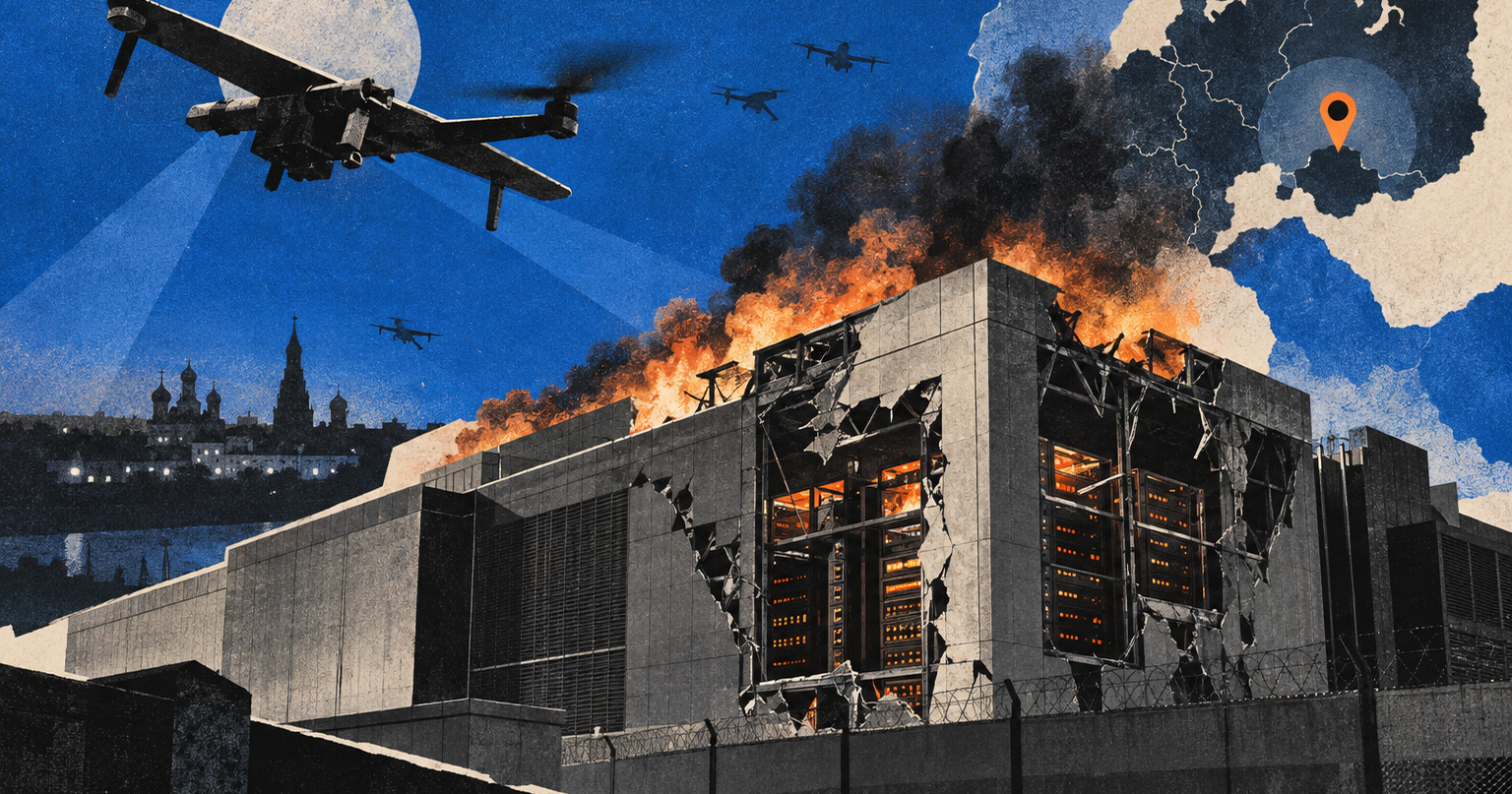
Russians trying to pay for groceries, book a taxi or ask their smart speaker a question ran into the same wall this weekend. Ukrainian drones hit a Yandex data center in Vladimir overnight Sunday, and the facility shut down completely, taking a large slice of Russia's everyday internet with it.
"The data center has shut down completely, and the remaining infrastructure is unstable," Yandex said. "The platform is operating in emergency mode."
It was the third strike on the company's data centers in a single week. Of Yandex's six data centers in Russia, three have now been targeted. Two are fully offline and the third has damaged infrastructure.
A week of strikes
The campaign began overnight October 7 to 8 with a fire at the Sasovo facility in the Ryazan region. That site, opened in 2014, reportedly houses two of Yandex's three AI training supercomputers, which is why the first hit already looked like a strike on Russia's leading AI infrastructure.
On October 9, drones hit the Kaluga data center and damaged part of its infrastructure. Yandex said no employees were injured in the earlier strikes, and emergency responders worked the site.
Then came Vladimir. That facility houses Galushkin, another Yandex supercomputer considered among the most powerful in Russia. Yandex has not disclosed whether any of its supercomputers were damaged. Together, the three targeted sites carried about 115 megawatts of capacity.
The outage spreads
Physical damage to one company turned into a nationwide headache. Russia's internet watchdog logged problems with email, taxi bookings, food orders and payments through Yandex Pay. The Alice voice assistant and smart home devices reportedly stopped working in some households.
The Kyiv Post reported that Yandex Music and the Telemost video calling service were disabled at the time, and that Yandex Compute Cloud suffered extensive outages, Gizmodo noted. Some healthcare cloud systems and government citizen data storage also run on Yandex Cloud.
The pain did not stop at Yandex's own apps. More than a dozen third-party services hosted on its infrastructure were reportedly affected, including retailers, internet providers, an online psychotherapy service, fitness businesses and the Russian segment of TikTok. Users also lost access to cloud files.
Yandex Cloud served about 64,000 customers as of mid-2026, according to its financial disclosures. The company has not said how many of them were hit.
Yandex tells customers to look elsewhere
The company's response amounts to an admission that its own redundancy is not enough. After the Vladimir strike, Yandex advised cloud customers to consider alternative recovery plans rather than relying only on switching between Yandex Cloud zones. It struck agreements with rival providers Selectel, K2Cloud and VK Cloud to help customers move their workloads.
Yandex called its data centers the "iron heart" of the company. "At this point, it is very difficult to provide a timeline for restoring the equipment at the data centers," it said.
One day before the Vladimir hit, Yandex quietly rewrote its legal exposure. On Saturday it updated its terms of service to exclude liability for failing to meet contractual obligations because of drone strikes and other attacks.
For businesses that built on Russia's biggest cloud, the message is plain. The company that runs their servers can no longer promise when those servers will come back.
Some offers on this page may be paid placements or contain affiliate links.
Cyberpresso: daily cyber & AI brief
Free daily newsletter, read in 5 minutes.
Subscribe free