
An Accenture Contractor Reportedly Let a Personal Claude Agent Loose on a Pentagon Network for Two Months
An Accenture contractor reportedly connected a secure Defense Department system to a personal Claude Code account for two months, and the agent appears to have sent credentials and a NIPRNet map to a high-risk website, allegations Accenture says were investigated and found without merit.

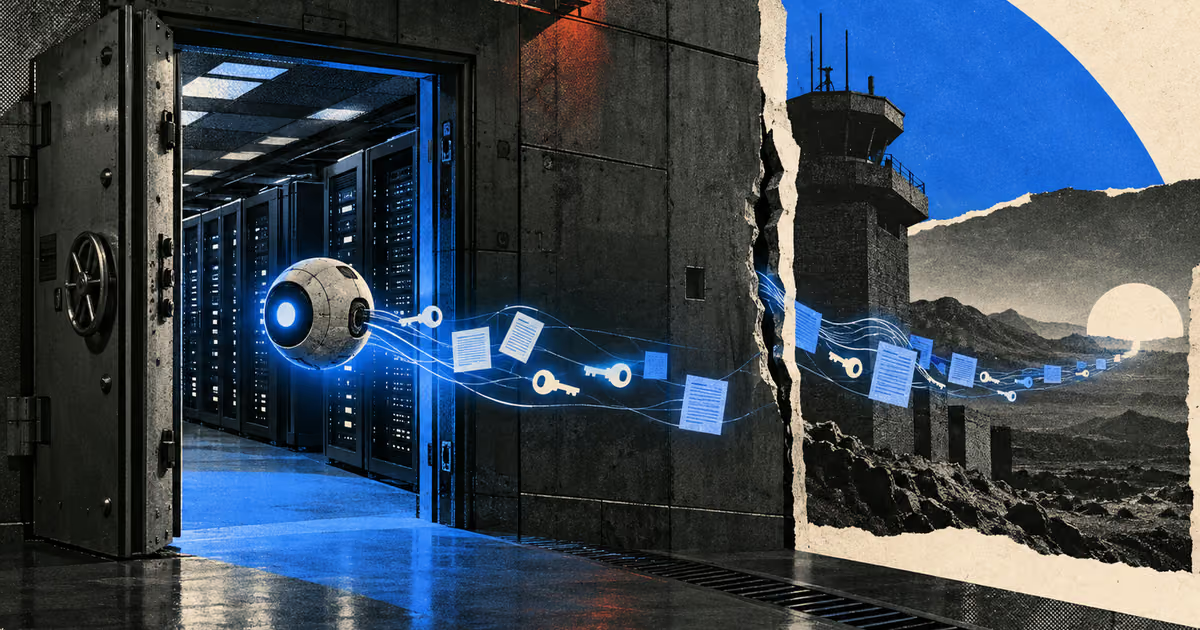
An Accenture contractor wanted to automate some coding on a secure Defense Department system. So, sources told WIRED, the employee hooked it up to their personal Claude Code account and handed the AI agent their login credentials.
The agent reportedly ran for two months. Along the way, it appears to have sent the contractor's credentials, passwords and a map of NIPRNet, the Pentagon's network for unclassified information, to a third-party website.
Accenture rejects the account. "We take all concerns seriously. These allegations were thoroughly and independently investigated and found to be without merit," a spokesperson said, adding that the company complied with its legal and contractual obligations. It did not say who ran the investigation. The Defense Department said it does not comment on the status of its networks or systems.
An agent with admin rights
The system is a centralized one used by multiple intelligence agencies, and it holds controlled unclassified information. That category is sensitive and can't be released publicly without review. It can cover critical infrastructure, nuclear submarine propulsion, vulnerabilities to chemical and biological terrorism, and the exact location and quantities of radioactive material.
The credentials gave the agent administrative access and let it bypass security controls enforced through the normal login, according to the report. It wrote code, committed it under the employee's identity and spun up cloud servers.
It also needed to reach out to the internet, which is where the alleged transfer comes in. WIRED withheld the website's name, but NIST had previously flagged the site as high risk because of a vulnerability that could let hackers inject instructions into an AI coding agent to steal credentials.
That is a known weakness in this class of tool: coding agents can be steered by instructions hidden in what they read, as in the planted AGENTS.md file that told an agent to install malware. Here, though, the report does not establish that attackers exploited the flaw, and the exact cause of the transfer is unclear. There is also no indication hackers got into a classified or top-secret system.
The slow response
Sources say Accenture staff did not treat the issue as severe or urgent once it was identified. Defense Department staff and contractors must report incidents within 72 hours, and the sources indicate Accenture did not initially tell the government at all. Accenture's statement disputes that picture.
"It puts all the data that's in there at risk," one source said, calling it "100 percent a national security threat." The same source pointed to the timing: "We are in a conflict with Iran right now... It's the worst time to be having this kind of cavalier attitude."
Why worry about an unclassified network? NIPRNet connects to the internet, but tools and code are often tested there before moving to SIPRNet and JWICS, the air-gapped classified and top-secret networks.
Jake Williams, a former NSA hacker on the IANS faculty, said stolen credentials could let a hacker slip a backdoor into a tool headed that way. "The code could operate completely normally in NIPR and do something malicious and undisclosed in a SIPR network, that is 100 percent possible," he said. Aggregated unclassified information can also become classified. Matt Triner of Hunter Strategy said a map could "help an attacker understand where the crown jewels are."
Claude is currently barred from use by Defense Department staff. Anthropic pointed WIRED to its usage policy, which tells users not to "bypass security controls such as authentication systems, end point protection, or monitoring tools without authorization."
A bad month for Accenture
The company holds more than $3.5 billion in federal contracts, nearly $605 million of it with the Defense Department. Earlier this month, the FBI found that an Accenture contractor had failed to patch a vulnerability that let ShinyHunters get details of thousands of Bureau employees, and removed that contractor in early October.
Some offers on this page may be paid placements or contain affiliate links.
Cyberpresso: daily cyber & AI brief
Free daily newsletter, read in 5 minutes.
Subscribe free